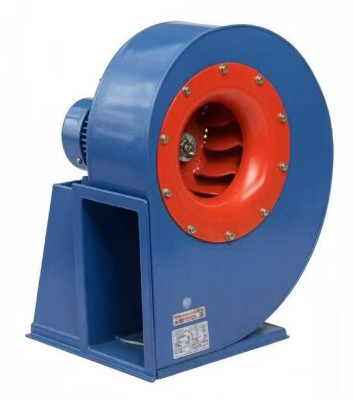
Complete Guide to Stainless Steel Centrifugal Fans: Advantages, Applications, and Selection Tips
In harsh operating conditions such as corrosive gases, high‑temperature exhaust, and clean rooms, why are more and more companies choosing stainless steel centrifugal fans? This article systematically reviews the core advantages, extensive application fields, technical parameters, and selection & procurement guidelines for stainless steel centrifugal fans, providing a comprehensive reference for industrial ventilation equipment selection.
Stainless Steel Centrifugal Fan: The “Hard‑Core Equipment” in Industrial Ventilation
In industrial production and engineering construction, fans are indispensable core ventilation devices. Carbon steel fans are widely used, but when faced with acid/alkaline waste gases, high‑temperature flue gases, or high‑humidity/salt environments, ordinary materials are prone to corrosion, greatly shortening equipment life. Stainless steel centrifugal fans are precisely the professional solution for these severe conditions. Made of 304, 316L and other stainless steel grades, they combine excellent corrosion resistance, high‑temperature resistance, and high strength, making them the first choice for ventilation in chemical, pharmaceutical, food, and environmental protection industries. A stainless steel centrifugal fan is a device specially used for ventilation, air exchange, and gas transport, and is widely applied in industrial production, buildings, mines, chemical plants, and many other fields.
Six Core Advantages of Stainless Steel Centrifugal Fans
Excellent Corrosion Resistance
Stainless steel centrifugal fansmade of stainless steel have strong corrosion resistance and can resist the erosion of acid/alkaline gases and humid environments. They are suitable for places with high environmental requirements, e.g., food processing plants and pharmaceutical factories.
Outstanding High‑Temperature Resistance
Stainless steel has a high melting point. Combined with special designs (e.g., high‑temperature bearings, water cooling systems), stainless steel centrifugal fans can operate stably at 200°C–450°C. Industries such as metallurgy (high‑temperature furnace fume exhaust) and petrochemicals (catalyst regeneration) heavily rely on such equipment. Stainless steel high‑temperature fansare widely used in industrial fields that require handling high‑temperature or corrosive gases due to their corrosion resistance, high‑temperature tolerance, and high strength.
High Efficiency and Energy Saving
Thanks to precision‑stamped blades and volute design, stainless steel centrifugal fans exhibit excellent aerodynamic performance, with significantly higher operating efficiency than similar products. The impeller is strictly dynamically balanced, resulting in smooth operation, low noise, large airflow, low vibration, and long life. Compared with conventional models, high‑efficiency stainless steel fans can substantially reduce long‑term energy consumption.
Robust Structural Design
Stainless steel centrifugal fans feature a sturdy structure, stable operation, convenient maintenance, and simple operation. They can run continuously for long periods, making them suitable for places such as production workshops and laboratories. High‑precision dynamic balancing ensures smooth rotor operation, lower noise, and longer service life.
Excellent Hygiene and Cleanliness
The smooth surface of stainless steel resists dust accumulation and is easy to clean, giving it an irreplaceable advantage in industries with extremely high cleanliness requirements, such as pharmaceuticals and food. The housing and key components of stainless steel centrifugal fansare made of food‑grade stainless steel, ensuring that the transported medium is not contaminated and meeting hygiene certification standards such as GMP and QS.
Flexible Customisation Options
Stainless steel centrifugal fans can be manufactured with different stainless steel grades (e.g., SUS304, SUS316L, 310S, 2205 duplex stainless steel) and support various functional configurations such as explosion‑proof motors and variable frequency drives, meeting the diverse needs of different industries.
Main Application Scenarios of Stainless Steel Centrifugal Fans
Chemical & Petrochemical Industry
The chemical industry uses them to transport acid/alkaline waste gases and chemical raw material gases, and for industrial wastewater aeration containing corrosive components – adapted to severe corrosive conditions to avoid equipment rusting. In petrochemicals, they are used for ventilation, desulfurisation, and denitrification in refineries, adapting to corrosive gases and high temperatures. For high‑temperature waste gas emissions in chemical production (e.g., acid mist, alkali mist, organic solvent vapours), the stainless steel material resists acid/alkali corrosion and prevents fan rust‑related failures.
Product Recommendation: For chemical environments, a 316L stainless steel centrifugal fan is recommended, offering more than 30% improvement in acid/alkali resistance over 304 stainless steel.
Pharmaceutical Industry
Stainless steel centrifugal fans are used for ventilation, exhaust, and purification equipment in pharmaceutical factories, ensuring sterility and cleanliness. In pharmaceutical drying processes, stainless steel high‑temperature fans discharge high‑temperature exhaust gases containing water vapour and small amounts of acidic gases. The stainless steel material ensures long‑term stable operation in humid, corrosive environments while being easy to clean, preventing residual waste gas impurities inside the fan and maintaining the high cleanliness required in pharmaceutical environments.
Food Industry
Stainless steel centrifugal fans are widely used in food drying, food machinery ventilation, and similar applications. The hot‑air circulation in food drying and sterilising equipment has strict hygiene standards. Because the stainless steel material is easy to clean and non‑contaminating, it is the first choice for supply and exhaust systems in the food industry. Moreover, in ventilation and exhaust for food processing and storage, stainless steel centrifugal fans help maintain a good hygienic environment.
Metallurgy & Foundry
High‑temperature flue gas induced draft from blast furnaces and steelmaking furnaces, and hot‑air circulation or dust emission during metal smelting and casting all require high‑temperature stainless steel fans. High‑temperature designs (with heat‑resistant coatings or cooling systems) ensure long‑term stable operation of the equipment.
Power & Environmental Protection
Boiler flue gas treatment (e.g., desulphurisation and denitrification systems) in coal‑fired power plants and waste incineration plants, as well as high‑temperature gas transport in dust removal equipment (bag filters, electrostatic precipitators), all rely on corrosion‑resistant stainless steel centrifugal fans. Stainless steel resists sulphide and chloride corrosion and can meet increasingly stringent environmental emission standards.
Other Special Fields
Stainless steel centrifugal fans are also widely used in:
Building materials & ceramics: high‑temperature waste gas emissions from cement kilns and glass furnaces, hot‑air supply and dust collection during ceramic sintering.
Marine & offshore engineering: handling high‑temperature exhaust gases in ships or corrosive gases in marine environments.
Semiconductor industry: high‑temperature exhaust systems in clean rooms to prevent metal contamination.
General industrial fields: ventilation, explosion protection, corrosion protection, petroleum, electric power, nuclear power stations, dryers, boiler cleaning, painting, environmental protection, etc.
Technical Parameters and Models of Stainless Steel Centrifugal Fans
When selecting a stainless steel centrifugal fan, pay close attention to the following core parameters:
| Parameter | Description | Selection Tips |
|---|---|---|
| Airflow (m³/h) | Volume of gas delivered per unit time | Calculate theoretical airflow based on process requirements, space size, and air change rate; add a 10‑15% margin |
| Pressure (Pa) | Ability to overcome system resistance (total pressure vs. static pressure) | Calculate system resistance including duct length and elbow number; avoid insufficient pressure causing airflow shortfall |
| Speed (r/min) | Rotational speed of the impeller | Prefer larger frame sizes with lower speeds for reduced noise and wear while meeting performance |
| Motor Power (kW) | Power input to the motor | Select high‑efficiency models (≥90% efficiency point) while meeting performance to reduce long‑term operating costs |
| Noise (dB) | Sound pressure level during operation | For noise‑sensitive locations (e.g., office areas, hospitals), choose low‑speed models or add silencers |
Mainstream stainless steel centrifugal fanmodels include4‑72 , 9-19, 4-79, etc., with the following parameter ranges:
4‑72 Series: Airflow 1,330–77,500 m³/h, pressure 200–3,200 Pa. Material options 304/316 stainless steel. Drive methods A, C, D, E. Suitable for petroleum, chemical, environmental protection, dust removal, metallurgy, civil buildings, etc.
9‑19/9‑26 Series: Airflow 824–123,000 m³/h, pressure 2,200–15,000 Pa. Widely used in high‑pressure forced ventilation for forging furnaces, glass, ceramics, electroplating, batteries, and for material conveying of grains, feed, mineral powder, plastics, etc.
4‑79 Backward‑curved Single‑Inlet Centrifugal Fan: Airflow 990–226,500 m³/h, total pressure 180–3,350 Pa. Drive options direct‑coupled, belt, or bearing housing. Applied in environmental protection, general ventilation, dust handling, industrial furnaces, etc.
Stainless Steel Material Selection Guide
The performance differences among stainless steel grades directly determine the service range and life of the fan. Select the material grade based on the specific operating conditions:
| Material Grade | Temperature Range | Suitable Applications |
|---|---|---|
| 304 Stainless Steel | approx. 300°C or lower | General corrosive environments, food processing, common chemical media |
| 316L Stainless Steel | approx. 350‑600°C | Chloride‑containing or high‑salt fog environments; acid/alkali resistance >30% better than 304; especially effective in high‑temperature, high‑humidity conditions |
| 310S Stainless Steel | up to 1200°C | Metallurgical furnaces, rotary kilns, ultra‑high‑temperature incineration devices; ultra‑high temperature oxidation resistance |
| 2205 Duplex Stainless Steel | — | Extreme corrosive environments with chlorides, seawater erosion, etc. |
Key Material Selection Points:
Do not use 304 stainless steel in chloride‑containing environments; choose 316L or 2205 duplex stainless steel.
For media containing sulphur gas, 321 stainless steel can be used; its surface addition of titanium stabilises carbides and effectively prevents intergranular corrosion.
If the operating temperature exceeds 600°C, choose 310S stainless steel or GH series high‑temperature alloys.
Key Points for Procurement and Selection of Stainless Steel Centrifugal Fans
Step 1: Define Operating Conditions
Determine gas composition (corrosive substances, dust), temperature range, and installation space constraints. Accurate matching ensures the stainless steel centrifugal fan operates stably, efficiently, and safely.
Step 2: Calculate Core Parameters
Calculate the required airflow and total pressure based on process needs, and consider safety factors (typically 1.05–1.10 for airflow, 1.10–1.15 for pressure) to ensure the fan performs well even with resistance fluctuations. Prefer models whose operating point falls in the high‑efficiency zone of the performance curve.
Step 3: Select Motor and Additional Functions
Explosion‑proof requirements: For flammable/explosive areas, choose an explosion‑proof stainless steel centrifugal fan with an explosion‑proof motor (Ex d IIB T4) and anti‑static coating.
Humid environments: Configure IP55 protection rating motor and moisture‑resistant bearings.
Variable frequency drive (VFD): A VFD‑driven stainless steel centrifugal fan can dynamically adjust airflow according to load, reducing energy consumption under part‑load conditions.
Step 4: Focus on Manufacturing Quality and Sealing
Check that welded parts use seamless welding technology, that dynamic balance accuracy meets Grade G2.5, and that vibration at high speed does not exceed 3 mm/s (reduces bearing wear). A stainless steel centrifugal fan with mechanical sealing effectively prevents axial gas leakage under high‑pressure conditions.
Maintenance and Care of Stainless Steel Centrifugal Fans
Regular cleaning: Internals and impeller should be inspected and cleaned regularly to prevent corrosive media from adhering and affecting performance.
Bearing lubrication: Replace lubricating grease as per manufacturer’s instructions, with maintenance intervals determined by the fan type and operating conditions.
Tightness check: Regularly check the tightness of foundation bolts, transmission parts, and other connections to prevent loosening during operation.
Operation monitoring: Monitor trends in vibration, noise, temperature, and other operating parameters; address any issues promptly.
Stainless steel centrifugal fans, with their excellent corrosion resistance, high‑temperature resistance, hygienic cleanliness, and efficient & stable operation, have become the core ventilation equipment in chemical, pharmaceutical, food, environmental protection, power, metallurgy, and many other industries. When selecting a stainless steel centrifugal fan, determine the required technical parameters (airflow, pressure, etc.) based on actual operating conditions, choose the appropriate stainless steel grade according to the corrosive medium and temperature, and pay attention to manufacturing quality and supplier service capabilities. This ensures that the stainless steel centrifugal fan maintains excellent reliability over long‑term operation and effectively reduces the total life‑cycle cost.
We offer a wide range of high‑quality stainless steel centrifugal fan products, including 304 stainless steel centrifugal fans, 316L stainless steel centrifugal fans, high‑temperature stainless steel centrifugal fans, explosion‑proof stainless steel centrifugal fans, and many other specifications. Non‑standard customisation is also supported. For a quote or selection consultation, please contact our technical team.