Are Centrifugal Fans Better Than Axial Fans? A Complete Guide for Industrial Applications
Introduction
When selecting an industrial ventilation system, one of the most common questions asked by engineers, contractors, and equipment buyers is: Are centrifugal fans better than axial fans? Both centrifugal fans and axial fans play important roles in industrial ventilation, HVAC systems, air circulation, and exhaust applications. However, they operate differently and are designed to meet different airflow and pressure requirements. Choosing the wrong industrial fan can lead to insufficient ventilation, increased energy consumption, higher operating costs, and unnecessary maintenance expenses.
The truth is that centrifugal fans are not always better than axial fans, and axial fans are not always the more economical choice. The best solution depends on the operating environment, required airflow volume, static pressure, duct resistance, installation space, and application requirements. For industrial facilities in Southeast Asia, Saudi Arabia, Russia, and other international markets, understanding the differences between these two types of industrial fans is essential for building an efficient and reliable ventilation system. In this guide, Shunda HVAC explains how centrifugal fans and axial fans compare and how to select the most suitable solution for your project.
1. What Is the Difference Between Centrifugal Fans and Axial Fans?
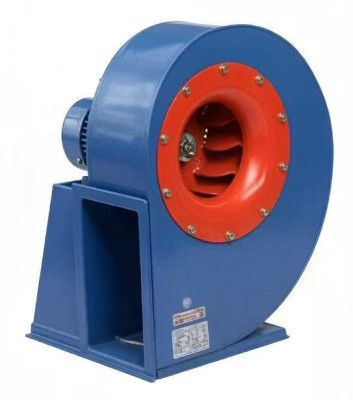
A centrifugal fan, also known as a centrifugal blower, works by drawing air into the center of the impeller and accelerating it outward through centrifugal force. The air then passes through the fan housing and exits in a direction generally perpendicular to the inlet airflow. This operating principle allows centrifugal fans to generate relatively high static pressure, making them suitable for industrial ventilation systems with long ducts, filters, air handling equipment, and other components that create airflow resistance.
An axial fan operates differently. It moves air parallel to the fan shaft, using rotating blades to push air directly through the fan. Because of this structure, an axial flow fan is commonly used in applications requiring large air volumes and relatively low system resistance. Industrial axial fans are widely installed in factories, warehouses, workshops, cooling systems, and general exhaust ventilation systems where effective air circulation is essential.
The most important difference between centrifugal fans and axial fans is their ability to handle system resistance. Centrifugal fans are generally more suitable for applications requiring higher static pressure, while axial fans are often preferred for large-volume airflow with lower pressure requirements. Understanding this distinction is the first step toward selecting the right industrial ventilation fan.
2. Airflow and Static Pressure: Which Fan Performs Better?
Airflow capacity and static pressure are two of the most important technical parameters when selecting an industrial fan. Airflow refers to the volume of air a fan can move within a specific period, commonly measured in cubic meters per hour (m³/h) or cubic feet per minute (CFM). Static pressure represents the resistance that the fan must overcome to move air through a ventilation system.
Centrifugal fans are particularly effective in systems where air must pass through long ventilation ducts, filtration equipment, elbows, dampers, and other components. Their design allows them to maintain airflow against relatively high resistance, making them a preferred option for industrial dust collection, fume extraction, boiler ventilation, and centralized exhaust systems. For facilities that require stable airflow under demanding operating conditions, choosing a properly selected centrifugal fan can significantly improve ventilation performance.
Axial fans, on the other hand, are often more suitable for applications where air needs to move directly through an open space or a relatively simple ventilation pathway. They can deliver high airflow volumes without requiring the more complex duct arrangements commonly associated with centralized ventilation systems. This makes axial flow fans a practical choice for factory air circulation, warehouse ventilation, workshop cooling, and wall-mounted exhaust applications.
Therefore, when comparing centrifugal fan vs axial fan performance, buyers should not focus only on the maximum airflow rating. The actual operating point, including airflow and static pressure, must match the resistance of the entire ventilation system.
3. Which Fan Is More Energy Efficient?
Energy efficiency is another important factor when comparing centrifugal fans and axial fans. Many industrial buyers assume that axial fans always consume less electricity because of their simpler structure. Although axial fans can offer excellent energy efficiency in low-pressure applications, this does not mean they are always more economical. The actual energy consumption depends on the fan's aerodynamic design, motor efficiency, operating point, and resistance within the ventilation system.
For example, installing an axial fan in a long duct system with multiple bends and filters may result in insufficient airflow or inefficient operation. In this situation, a centrifugal fan designed for the required static pressure may deliver better overall system performance. Conversely, using a high-pressure centrifugal blower for a large warehouse that only needs general air circulation could increase equipment costs and consume more energy than necessary. Therefore, the most energy-efficient industrial ventilation fan is the one that matches the actual system requirements.
Modern industrial centrifugal fans can be equipped with optimized impellers, high-efficiency motors, and variable frequency drives (VFDs) to adjust airflow according to changing operating conditions. Industrial axial flow fans can also benefit from aerodynamic blade designs and efficient motor configurations. For factories operating ventilation equipment continuously, selecting the correct fan specifications can help reduce long-term electricity costs and improve the return on investment.
4. Industrial Applications: Where Are Centrifugal Fans Better?
Centrifugal fans are widely used in industrial environments where ventilation systems require stable airflow under relatively high resistance. In chemical plants, pharmaceutical factories, laboratories, and wastewater treatment facilities, air often needs to pass through filtration equipment, exhaust ducts, or air treatment systems before being discharged. A properly selected industrial centrifugal fan can provide the pressure required to overcome these resistance losses.
In dust collection and industrial fume extraction applications, centrifugal blowers are particularly useful because they can be integrated with dust collectors, filtration units, and centralized exhaust pipelines. Different impeller designs and construction materials can be selected according to the characteristics of the transported air. For example, FRP centrifugal fans are suitable for certain corrosive environments when the resin system, temperature range, and chemical compatibility meet the application requirements. Stainless steel centrifugal fans may also be considered for industrial facilities requiring specific corrosion resistance or hygiene standards.
For industrial projects in Southeast Asia, where chemical processing, electronics manufacturing, food production, and wastewater treatment are important industries, selecting the correct fan material is just as important as selecting airflow and pressure. High humidity, corrosive gases, and continuous operating conditions can affect equipment durability. Shunda HVAC offers different centrifugal fan configurations to support industrial ventilation requirements across various operating environments. Buyers can explore our Industrial Centrifugal Fan Product Range to review available models and applications.
5. When Are Axial Fans the Better Choice?
Although centrifugal fans offer advantages in high-resistance systems, axial fans are often a better solution for large spaces that require direct air circulation and high-volume ventilation. Industrial warehouses, manufacturing workshops, logistics centers, agricultural buildings, and commercial facilities commonly use axial flow fans to remove hot air and introduce fresh outdoor air.
One of the main advantages of an industrial axial fan is its relatively simple installation. Wall-mounted, roof-mounted, and duct-mounted configurations allow engineers to design flexible ventilation systems according to the building structure. Compared with complex centralized duct systems, direct exhaust ventilation using axial fans can reduce installation complexity and provide an economical solution for facilities that do not require high static pressure.
In hot and humid regions such as Singapore, Malaysia, Thailand, Indonesia, and the Philippines, factory ventilation plays an important role in managing indoor heat and improving working conditions. Industrial axial fans can help remove accumulated warm air from production areas, reduce stagnant air, and support continuous air exchange. For these applications, a properly sized axial flow fan may provide a more practical and cost-effective solution than a centrifugal blower.
Shunda HVAC also supplies industrial axial fan solutions, including FRP axial fans and metal axial flow fans, for different ventilation environments. For projects requiring corrosion-resistant construction, the FT35-11 molded FRP axial flow fan is one option worth evaluating. You can explore our Axial Flow Fan Product Range to learn more about available industrial ventilation products.
6. Can Centrifugal Fans and Axial Fans Be Used Together?
In some industrial and commercial ventilation projects, using both centrifugal fans and axial fans is more effective than relying on a single fan type. Different areas of a building may have different airflow and pressure requirements, so combining the two technologies can improve the overall ventilation design.
For example, a manufacturing facility may use centrifugal fans for centralized dust collection and fume extraction, while axial fans provide general ventilation and heat removal in the production workshop. A commercial building may use centrifugal blowers in air handling equipment to circulate conditioned air through duct networks, while axial fans support equipment cooling or local exhaust ventilation. This combination allows each fan to operate in an environment suited to its performance characteristics.
For large industrial projects, engineers should evaluate the complete ventilation network rather than selecting equipment independently. The airflow requirements of different zones, duct resistance, exhaust positions, air supply arrangements, and operating schedules should all be considered. A well-designed system can improve ventilation efficiency, reduce unnecessary energy consumption, and provide more reliable long-term operation.
7. How to Choose the Right Fan for Your Project
Before purchasing an industrial ventilation fan, buyers should first identify the required airflow volume and static pressure. These two parameters determine whether a centrifugal fan or an axial fan is more suitable for the project. If the system includes long ducts, filtration equipment, multiple bends, or other components that create significant resistance, a centrifugal fan is generally a better starting point. If the application mainly involves direct air movement, general exhaust, or large-volume ventilation with relatively low resistance, an axial fan may be the more economical option.
The operating environment should also influence the final decision. Factors such as air temperature, humidity, dust concentration, corrosive gases, noise requirements, and continuous operating hours can affect fan material selection and equipment configuration. For special industrial applications, buyers may need FRP construction, stainless steel materials, explosion-proof motors, or customized impeller designs. It is also important to confirm the required certifications and applicable safety standards before purchasing equipment for hazardous environments.
Working directly with an experienced industrial fan manufacturer can help reduce the risk of incorrect equipment selection. When requesting a quotation, international buyers should provide the required airflow, static pressure, application, installation method, power supply, and operating environment. These details allow the manufacturer to recommend a suitable model instead of simply providing a product based on motor power or fan diameter.
8. Why Choose Shunda HVAC for Industrial Fan Solutions?
Shunda Air Conditioning Equipment Group Co., Ltd. has been engaged in HVAC equipment and industrial ventilation manufacturing since 2005. With a broad product range covering centrifugal fans, axial flow fans, air handling units, fan coil units, and other ventilation equipment, Shunda provides solutions for industrial buildings, commercial facilities, and specialized ventilation projects. Our product portfolio includes FRP centrifugal fans, high-pressure centrifugal blowers, stainless steel industrial fans, molded FRP axial fans, and metal axial flow fans.
For overseas distributors, engineering contractors, and industrial equipment buyers, choosing a manufacturer with multiple product categories makes it easier to compare different ventilation solutions and develop customized project configurations. Shunda supports product selection, OEM requirements, and technical consultation to help customers identify suitable equipment according to their airflow, pressure, and installation conditions.
Whether you are sourcing a centrifugal fan for a chemical plant in Saudi Arabia, an axial fan for a manufacturing facility in Malaysia, or industrial ventilation equipment for a warehouse in Russia, our team is ready to discuss your project requirements. We focus on providing practical industrial ventilation solutions, reliable manufacturing support, and professional service for international customers.
Conclusion: Are Centrifugal Fans Better Than Axial Fans?
So, are centrifugal fans better than axial fans? The answer depends on the application. Centrifugal fans are generally better suited to high-static-pressure systems, ducted ventilation, dust collection, and industrial exhaust applications. Axial fans are often the better choice for high-volume airflow, general factory ventilation, warehouse cooling, and low-resistance air circulation.
Neither fan type is universally superior. The key to achieving efficient industrial ventilation is matching the fan's performance to the actual system requirements. By considering airflow, static pressure, energy consumption, installation conditions, and material compatibility, businesses can select the right equipment and reduce unnecessary operating costs.
Looking for a reliable centrifugal fan or axial fan manufacturer in China? Contact Shunda HVAC today for product information, technical consultation, OEM solutions, and a competitive quotation. Our team is ready to support your next industrial ventilation project.