How to Choose the Right Industrial Ventilation Fan for Your Factory
Efficient industrial ventilation is essential for maintaining a safe, comfortable, and productive working environment. In manufacturing plants, warehouses, chemical processing facilities, workshops, and commercial buildings, poor air circulation can lead to excessive heat, high humidity, dust accumulation, and the buildup of unwanted fumes. Choosing the right industrial ventilation fan helps improve indoor air quality, support equipment reliability, and reduce unnecessary energy consumption. However, different industrial applications require different airflow capacities, pressure levels, materials, and installation configurations. Understanding these factors is the first step toward selecting a reliable industrial ventilation system that meets both current operating requirements and long-term project goals.
For factory owners, HVAC contractors, engineering companies, and equipment distributors, selecting a suitable industrial ventilation fan is not simply a matter of choosing a model with a high airflow rating. The fan must work effectively with the entire ventilation system, including ductwork, filters, dampers, air inlets, and exhaust outlets. A properly selected fan can provide stable airflow, improve exhaust efficiency, and support continuous industrial operations. As a professional HVAC equipment manufacturer, Shunda HVAC provides a range of centrifugal fans, axial flow fans, and other ventilation solutions for industrial and commercial projects in international markets.
Centrifugal Fan vs. Axial Flow Fan: Which Is Better?
When selecting an industrial ventilation fan, one of the most important decisions is whether to use a centrifugal fan or an axial flow fan. Although both types are widely used in industrial ventilation systems, their operating principles and performance characteristics make them suitable for different conditions.
A centrifugal fan draws air into the impeller and directs it outward through centrifugal force. This design makes industrial centrifugal fans particularly suitable for applications requiring relatively high static pressure, including ducted ventilation systems, dust collection equipment, industrial exhaust systems, and applications involving filters or other airflow resistance. When air must travel through a complex duct network or pass through multiple system components, pressure performance becomes a critical selection factor. Depending on the required airflow, pressure, temperature, and air composition, an appropriately configured centrifugal blower can help maintain stable system performance.
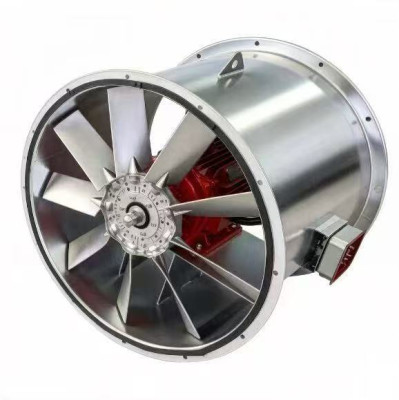
An axial flow fan moves air primarily parallel to the rotating shaft. It is commonly used in applications requiring large airflow volumes with relatively low system resistance, such as factory ventilation, warehouse air circulation, equipment cooling, and general exhaust. Industrial axial flow fans can offer a compact installation structure and are available in different mounting configurations, including wall-mounted, duct-mounted, and other project-specific arrangements. For facilities that need to remove hot air or introduce fresh air across large spaces, an axial fan may provide an effective and practical solution.
The best option depends on the actual operating conditions rather than the product name alone. Before purchasing industrial ventilation equipment, project engineers should evaluate the required airflow, total system pressure, duct layout, installation space, noise limits, and operating environment. Explore Shunda's centrifugal fan solutions and axial flow fan products to compare available options for your application.

Key Factors to Consider When Selecting an Industrial Ventilation Fan
Airflow capacity and static pressure are two of the most important technical parameters when choosing an industrial ventilation fan. Airflow indicates how much air the fan can move over a specific period, while static pressure represents its ability to overcome resistance within the ventilation system. A fan with a high advertised airflow rating may not deliver the required volume after being connected to long ducts, filters, elbows, louvers, and other components. For this reason, buyers should provide suppliers with the target airflow, estimated system resistance, operating conditions, and any available fan performance requirements. Reviewing the fan performance curve and selecting an appropriate operating point can help prevent insufficient ventilation, excessive energy use, and unstable operation.
Material selection is another important consideration, especially in industrial environments where air may contain moisture, corrosive gases, chemical vapors, or fine particles. Standard steel construction may be suitable for many general ventilation applications, while stainless steel or fiber-reinforced plastic (FRP) may be worth considering for specific corrosive environments. An FRP centrifugal fan, for example, can be a suitable candidate for certain chemical processing facilities, laboratories, wastewater treatment plants, and other applications where corrosion resistance is important. However, material compatibility must be assessed against the actual chemicals, concentrations, temperatures, and operating conditions. Buyers should also confirm the suitability of the impeller, shaft, seals, motor, and other components rather than evaluating the casing material alone.
Energy efficiency, noise levels, maintenance access, and installation conditions also influence the total cost of ownership. Industrial fans may operate for extended periods, so an unsuitable operating point can increase electricity consumption over time. Selecting an appropriately sized fan, matching the motor to the required duty, and considering suitable speed-control strategies can help improve operating efficiency. At the same time, routine inspection and cleaning should be practical for maintenance personnel. For factories operating in hot, humid, or dusty environments, the selection process should account for local climate conditions and the need for dependable operation throughout the year.
Industrial Ventilation Solutions for Southeast Asia and Global Markets
Industrial facilities across Southeast Asia face a wide range of ventilation challenges because of differences in climate, building design, production processes, and environmental conditions. In markets such as Malaysia, Singapore, Indonesia, Thailand, Vietnam, and the Philippines, high ambient temperatures and humidity can increase the importance of effective air circulation and heat removal. Manufacturing plants may require continuous exhaust ventilation, while warehouses and logistics centers may prioritize large-volume air movement. Chemical plants and wastewater treatment facilities may require more specialized corrosion-resistant equipment, depending on the characteristics of the exhaust air.
In the Middle East, including Saudi Arabia, industrial ventilation projects may need to account for high outdoor temperatures, dust exposure, and demanding operating conditions. For buyers in Russia and other colder regions, temperature variation and seasonal operating requirements may influence equipment materials, motor selection, and installation design. These regional factors should be considered during the engineering and procurement stages to ensure that the selected industrial ventilation fan matches the project environment.
Shunda HVAC offers industrial ventilation and air-conditioning equipment for a wide range of commercial and industrial applications. Its product portfolio includes centrifugal fans, axial flow fans, FRP ventilation fans, air handling units, fan coil units, and other HVAC equipment. By discussing project requirements with an experienced supplier, buyers can compare different configurations and identify suitable solutions for their facilities. Visit the Shunda HVAC Product Center to explore the available equipment range.

Why Work with an Experienced Industrial Fan Manufacturer?
Working with an experienced industrial fan manufacturer can make equipment selection and project coordination more efficient. Beyond the initial purchase price, industrial buyers should evaluate manufacturing capability, product range, technical communication, quality-control processes, delivery arrangements, and after-sales support. For OEM projects, distributors, and engineering contractors, the ability to discuss application requirements and clarify product specifications is particularly important.
Shunda Air Conditioning Equipment Group Co., Ltd. provides HVAC and ventilation equipment for industrial, commercial, and building-service applications. Its range of ventilation products allows buyers to compare different fan types and related equipment according to project requirements. When requesting a quotation, buyers can help accelerate the selection process by sharing the intended application, required airflow, static pressure, air temperature, air composition, installation method, power supply, destination country, and estimated order quantity. Where available, drawings, equipment schedules, and technical specifications can further support the evaluation process.
For international buyers, clear communication at the quotation stage helps reduce uncertainty about equipment configuration and project suitability. If your project requires customized dimensions, special construction materials, specific electrical requirements, or a particular mounting arrangement, communicate these requirements before confirming the order. Final equipment selection should be based on verified technical data and applicable local requirements.
Conclusion: Find the Right Industrial Ventilation Fan for Your Project
Choosing the right industrial ventilation fan requires a clear understanding of airflow demand, static pressure, air quality, material compatibility, energy efficiency, and installation conditions. Centrifugal fans are often appropriate for systems with higher pressure requirements or substantial duct resistance, while axial flow fans are frequently used for high-volume air circulation and general exhaust applications. For corrosive or otherwise demanding environments, the construction materials and suitability of all critical components must be evaluated carefully.
A well-designed industrial ventilation system can support better indoor air quality, reliable production, and efficient long-term operation. Whether you are planning a new factory, upgrading an existing exhaust system, sourcing equipment for an HVAC project, or looking for a dependable industrial fan supplier, Shunda HVAC can help you explore suitable ventilation equipment for your application.
Contact Shunda HVAC for an Industrial Ventilation Fan Quotation
Looking for a centrifugal fan, axial flow fan, FRP fan, or customized industrial ventilation solution? Contact the Shunda HVAC team to discuss your project requirements, request product information, and obtain a quotation.
Website: https://www.shundahvac.com/
Email: silvia@shundahvac.com
WhatsApp: +86 156 6600 7616