Where Are Axial Flow Fans Commonly Used? The Ventilation Backbone of Southeast Asia’s Industrial and Commercial Growth
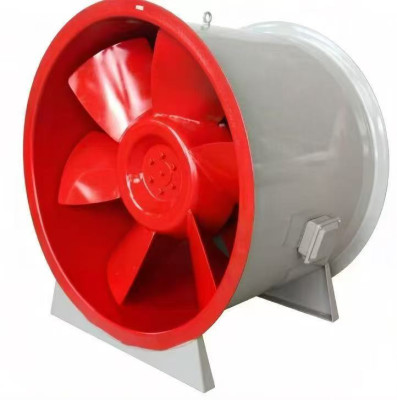
If you operate a factory, warehouse, farm, or commercial building anywhere from Jakarta to Ho Chi Minh City to Manila, you already know the daily battle: the tropical climate does not negotiate. When outdoor temperatures push past 35°C and relative humidity climbs above 80%, a conventional steel-structured warehouse or production floor turns into a giant steam chamber, and ordinary ventilation strategies begin to fail. This is precisely where the axial flow fan stops being just another piece of equipment and becomes the foundation of a workable, energy-conscious ventilation plan. The axial flow fan moves air along the axis of the fan blade, delivering an exceptionally high volume of airflow at low-to-medium pressure. In a region where the problem is rarely about pushing air through miles of high-resistance ductwork, and almost always about exchanging massive volumes of hot, humid, stagnant air with fresh outdoor air quickly, that performance profile is not a compromise—it is the correct engineering choice. Southeast Asia’s industrial and commercial construction is expanding at a pace that makes reliable, energy-efficient ventilation a non-negotiable part of project design, and the axial fan sits at the center of that demand across modern factories, logistics warehouses, shopping centers, underground parking garages, and power stations.
Nowhere is the axial fan’s value more immediate than in the region’s manufacturing plants, where heat and humidity do not simply make workers uncomfortable—they erode productivity, accelerate equipment corrosion, and compromise product quality. In Indonesia’s electronics factories and food processing plants, axial fans engineered for high-temperature, high-humidity environments are deployed to disperse hot, humid air with ultra-large air volumes, and intelligent speed control allows operators to match fan output to real-time workshop temperatures rather than running at full power around the clock. This matters because the cost of ventilation in tropical industrial settings is not measured only in comfort; it is measured in electricity bills that can quietly consume operational budgets. Axial fans are inherently suited to this task because they generate high airflow at lower pressure, making them the preferred choice for long ventilation ducts, fresh air supply, exhaust systems, and continuous air circulation in workshops where the goal is volume exchange rather than high-pressure delivery. For plant managers across Thailand, Vietnam, and Malaysia, the axial fan is the workhorse that keeps the production floor breathable without turning the ventilation system into a second production cost center.
The warehouse and logistics sector tells an equally urgent story. In the logistics parks of Ho Chi Minh City, Bangkok, and Manila, managers face a common adversary that no amount of pallet racking optimization can solve: the tropical “sauna day” phenomenon, where heat accumulates under the roof and humidity saturates the air until workers slow down and moisture-sensitive goods are put at risk. The axial fan addresses this through a straightforward but powerful mechanism—wall-mounted units extract hot, stale air while drawing cooler outdoor air through the space, creating a continuous “intake, circulate, exhaust” cycle that breaks up heat stratification and flushes out humidity. Unlike complex HVAC systems that demand significant capital investment and ongoing refrigerant costs, a well-configured axial fan array delivers meaningful heat relief at a fraction of the operational complexity, which is why warehouse operators across Southeast Asia increasingly treat high-volume axial ventilation as a baseline infrastructure requirement rather than an optional upgrade.
Agriculture and livestock production present perhaps the most climate-sensitive application of all. In poultry houses, pig barns, and dairy facilities across the tropical belt, heat stress is not an abstract concern—it directly reduces feed conversion, slows weight gain, depresses milk yield, and increases mortality rates. The axial fan functions as the “lung” of the livestock house, moving large volumes of air at relatively low electrical consumption so that metabolic heat, moisture, and waste gases do not accumulate in the breathing zone. In greenhouse operations, the same principle applies with equal force: axial circulation fans regulate temperature and humidity, prevent localized hot spots, and maintain the airflow patterns that support consistent plant growth. For Southeast Asian producers supplying growing urban populations, the axial fan is not a luxury but a production asset whose reliability translates directly into yield stability and animal welfare outcomes.
Commercial and public infrastructure applications further demonstrate the axial fan’s versatility. In the mixed-use towers and underground parking facilities rising across Phnom Penh, Kuala Lumpur, and Singapore, axial and jet fans are integrated into ventilation and smoke-extraction systems that must perform under normal daily operation and emergency conditions alike. Shopping centers, hospitals, office complexes, and educational facilities rely on axial fans for fresh-air circulation and exhaust, while subway stations, utility tunnels, and parking garages depend on their compact cylindrical form to fit into constrained duct networks without sacrificing airflow performance. As Southeast Asian cities continue investing in industrial parks and public infrastructure, the axial fan’s ability to combine high airflow capacity, compact installation, and low energy consumption makes it an indispensable component of modern building services engineering.
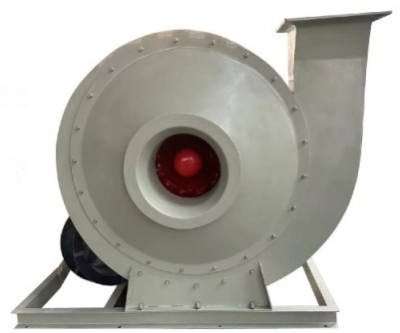
What unites all these applications is a simple physical truth that every engineer specifying ventilation for tropical Southeast Asia eventually confronts: axial flow fans excel at moving large volumes of air through low-pressure systems, and that is exactly what the region’s buildings and facilities require. The centrifugal fan has its place where high static pressure is the governing constraint, but in the vast open volumes of factories, warehouses, barns, and parking structures, the axial fan delivers more usable airflow per kilowatt and per square meter of installed space. For project owners, MEP contractors, and facility managers across Southeast Asia, choosing the right axial fan is less about selecting a product category and more about recognizing that the climate itself has already made the decision. The question is not whether axial flow fans belong in your ventilation strategy—it is whether the units you specify are engineered to perform reliably in the heat, humidity, and continuous-duty conditions that define this region.