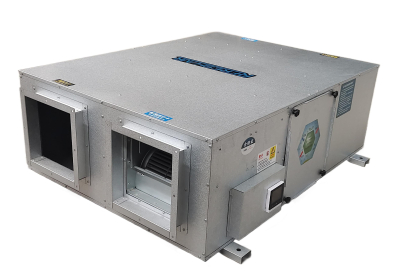
Modular AHU vs. Traditional Air Handling Unit: Key Differences
Choosing the right air handling unit (AHU) is an important decision for commercial buildings, industrial facilities, hospitals, hotels, and large HVAC projects. When comparing a modular AHU vs. a traditional air handling unit, buyers need to consider more than the initial equipment price. Installation requirements, transportation, system configuration, energy efficiency, maintenance accessibility, and long-term operating costs can all affect the overall value of an HVAC investment.
A modular air handling unit is designed with independent functional sections that can be combined according to specific project requirements. Compared with conventional air handling units with relatively fixed or customized integrated structures, modular AHUs offer greater flexibility in configuration, transportation, and on-site assembly. Understanding these differences can help contractors, engineers, and project owners select the most suitable air handling equipment for their applications.

What Is a Modular Air Handling Unit?
A modular air handling unit is an HVAC system built from multiple independent functional sections. Each section performs a specific air treatment function, and different modules can be combined to create a complete air handling system. Depending on the project requirements, a modular AHU may include fresh air intake sections, pre-filters, medium-efficiency filters, cooling coils, heating coils, humidifiers, dehumidification sections, heat recovery modules, silencers, and fan sections.
The modular design allows engineers to configure the equipment according to required airflow, cooling capacity, filtration level, indoor air quality, and installation conditions. Instead of purchasing a system with only a limited standard configuration, customers can select the functional sections that match their actual operating requirements. This flexibility makes modular air handling units suitable for factories, pharmaceutical plants, food processing facilities, hospitals, cleanrooms, shopping malls, hotels, and office buildings.
Another important feature is the sectional construction. Large modular AHUs can be manufactured and transported in separate sections before being assembled at the project site. This is particularly useful for projects with restricted access, narrow equipment rooms, limited transportation space, or large air handling capacity requirements. For international HVAC projects, sectional transportation can also make logistics and equipment delivery easier to organize.
What Is a Traditional Air Handling Unit?
A traditional air handling unit generally refers to a conventional integrated or fixed-configuration AHU. It is designed to provide essential air treatment functions such as air filtration, cooling, heating, humidity control, and air circulation. Depending on the manufacturer and project requirements, traditional units may be supplied as complete packaged equipment or as custom-built systems.
Traditional air handling units have been widely used in commercial and industrial HVAC systems for many years. Their relatively straightforward configurations can make them suitable for projects with standard airflow requirements, sufficient installation space, and limited demands for future system modifications.
However, when equipment dimensions, transportation routes, installation conditions, and air treatment requirements become more complicated, a fixed or less flexible configuration may create additional engineering challenges. Some conventional units may require more extensive modification or replacement when the building's ventilation requirements change. This does not mean that every traditional AHU has these limitations, because modern conventional systems can also be customized. The actual difference depends on the equipment structure, manufacturing approach, and level of configuration flexibility.

Modular AHU vs. Traditional Air Handling Unit: Key Differences
The main difference between a modular AHU and a traditional air handling unit is the way the equipment is configured, manufactured, transported, and maintained. A modular system uses independent functional sections that can be arranged according to project requirements, while a conventional integrated unit may use a more fixed equipment layout. This difference influences several important aspects of HVAC system design and installation.
1. System Configuration and Design Flexibility
Configuration flexibility is one of the biggest advantages of a modular air handling unit. Different functional sections can be selected and combined to meet specific air treatment requirements. For example, an industrial factory may require multiple filtration stages and cooling coils, while a pharmaceutical cleanroom may need higher-efficiency filtration and more precise temperature and humidity control. A modular AHU can be configured to accommodate these different requirements.
Traditional air handling units are also available in customized designs, but their configuration may depend more heavily on the original equipment structure and manufacturing specifications. When additional functions are required, engineers may need to redesign the equipment layout or select a different unit model. For projects involving multiple operating conditions or specialized air treatment requirements, a modular AHU can provide a more convenient approach to system configuration.
2. Transportation and On-Site Installation
Transportation is an important consideration when purchasing large industrial HVAC equipment. A fully assembled air handling unit may have significant overall dimensions, making transportation through narrow roads, building entrances, elevators, or mechanical rooms difficult.
A modular air handling unit addresses this challenge through sectional manufacturing and delivery. Smaller units can often be transported as complete assemblies, while larger units can be separated into individual sections for shipping and assembled on-site. A rigid steel base and clearly organized modules can also support equipment handling and installation.
For overseas projects in Southeast Asia, Saudi Arabia, and other international markets, this structure can provide additional flexibility when arranging export transportation and site installation. However, the final installation time still depends on project access, foundation preparation, lifting equipment, connection work, and commissioning requirements.
3. Maintenance and Component Replacement
Maintenance accessibility directly affects the long-term operation of an air handling system. Filters, cooling coils, fans, dampers, and drainage components require regular inspection and maintenance to maintain reliable performance.
Modular AHUs can be designed with independent functional sections and maintenance access doors, allowing technicians to inspect and service specific components more conveniently. For example, filter sections can be checked or replaced without unnecessarily dismantling other major equipment sections. This design can help simplify routine maintenance and reduce unnecessary maintenance work.
Traditional AHUs can also provide inspection doors and accessible components, but maintenance convenience depends on their internal layout and available service space. When selecting equipment, buyers should evaluate the accessibility of filters, coils, fans, motors, drain pans, and electrical control components rather than considering the equipment category alone.
4. Energy Efficiency and Operating Performance
Energy efficiency is another important factor when comparing modular AHU vs. traditional air handling unit solutions. However, it is important to understand that modular construction does not automatically guarantee lower energy consumption. Actual performance depends on fan efficiency, motor selection, filter resistance, coil heat transfer performance, insulation quality, air leakage, control strategy, and system operating conditions.
A properly designed modular air handling unit can integrate high-efficiency fans, suitable cooling and heating coils, multi-stage filtration, and intelligent control systems. Variable frequency drives and optional EC fans can help adjust airflow according to actual demand, reducing unnecessary energy consumption under partial-load conditions.
Insulated double-skin panels also help reduce unwanted heat transfer and improve equipment thermal performance. For buildings that operate continuously, such as hospitals, hotels, manufacturing facilities, and shopping centers, selecting the right AHU configuration can contribute to more efficient HVAC operation over the equipment's service life.
5. Initial Investment and Long-Term Costs
The initial purchase price of an air handling unit is only one part of the total project cost. Buyers should also consider transportation, installation, commissioning, maintenance, replacement components, and energy consumption.
A traditional air handling unit with a standard configuration may be a cost-effective choice for relatively simple applications. A modular AHU may involve additional design and manufacturing considerations, especially when the project requires specialized filters, multiple coils, humidity control, or customized dimensions. However, its flexible configuration and sectional delivery may offer practical advantages for large or complex projects.
The most economical solution should therefore be evaluated according to the total lifecycle cost rather than the equipment quotation alone. Comparing the same airflow, cooling capacity, external static pressure, filtration requirements, and operating conditions is essential when requesting quotations from different AHU manufacturers.
Installation, Transportation and Maintenance: Why Modular Design Matters
For large commercial and industrial HVAC projects, equipment installation can be just as important as equipment performance. A large air handling unit must be transported into the mechanical room, positioned correctly, connected to ductwork and water piping, and integrated with the building automation system.
The sectional structure of modular air handling units provides additional flexibility during these processes. Each module can be transported separately when necessary, reducing some of the access difficulties associated with oversized equipment. Once the sections arrive at the installation location, technicians can assemble the unit according to the manufacturer's installation drawings and technical instructions.
In addition, a modular AHU can be designed around the actual maintenance conditions of the building. Adequate service clearance, removable panels, accessible filters, and properly arranged drainage systems help improve maintenance convenience. For facilities operating throughout the year, these details are particularly important because unexpected equipment downtime can affect production, indoor air quality, and occupant comfort.
Which Air Handling Unit Is Better for Industrial and Commercial Projects?
The best choice depends on the building type, project scale, ventilation requirements, installation conditions, and budget. Neither modular AHUs nor traditional air handling units are universally suitable for every application.
For small commercial buildings, standard ventilation systems, and projects with relatively simple air treatment requirements, a conventional air handling unit may provide a practical and economical solution. When the equipment room has sufficient space and the system does not require frequent configuration changes, a standard unit can meet the project's operational needs.
For large factories, pharmaceutical facilities, electronics manufacturing plants, hospitals, food processing facilities, and commercial complexes, modular air handling units can offer greater flexibility. These projects often require specific combinations of filtration, cooling, heating, humidity control, and fresh air treatment. The ability to select different functional sections allows engineers to design an AHU system that better matches the building's operating requirements.
Modular AHUs are also worth considering for overseas projects where equipment transportation and installation access require additional planning. In regions with hot and humid climates, such as Southeast Asia, engineers should pay particular attention to cooling coil selection, condensate drainage, insulation, corrosion protection, and filtration performance.
How to Choose the Right AHU for Your Project?
Before selecting an air handling unit, project owners and HVAC contractors should identify the required airflow, cooling capacity, external static pressure, filtration efficiency, fresh air ratio, and indoor temperature and humidity requirements. Installation dimensions, transportation restrictions, local climate conditions, and maintenance access should also be included in the equipment selection process.
For industrial applications, the type of production process is particularly important. A general manufacturing workshop may require effective ventilation and temperature control, while a pharmaceutical cleanroom or electronics factory may need more advanced filtration and stricter environmental control. These differences directly affect the required AHU configuration and equipment specifications.
It is also advisable to work with an experienced air handling unit manufacturer that can provide technical selection support, customized equipment dimensions, detailed drawings, and installation guidance. Providing the manufacturer with project drawings, airflow requirements, operating conditions, and equipment room dimensions can help engineers recommend a more suitable solution and prepare an accurate quotation.
Why Choose Shunda Modular Air Handling Units?
Shunda Air Conditioning Equipment Group Co., Ltd. is a professional HVAC equipment manufacturer in China, providing air handling units and customized ventilation solutions for industrial and commercial projects. Our modular air handling units are designed to meet different air treatment requirements through flexible functional section combinations and project-based configurations.
Shunda modular AHUs feature a rigid steel base for transportation and on-site assembly, double-skin insulated panels with aluminum alloy frames, and insulation materials such as mineral wool or PU foam. The equipment can be configured with pre-filtration and medium-efficiency filtration sections, including G4 pre-filters and F7/F8 medium filters, according to project requirements. A sloped drainage design helps facilitate condensate discharge, while optional automatic control systems support intelligent equipment operation.
Our modular AHU product range covers airflow capacities from approximately 3,500 m³/h to 200,000 m³/h, with multiple standard specifications and customizable functional sections. Depending on the application, configurations can be selected for cooling, heating, filtration, humidity control, and other air treatment requirements. These solutions are suitable for factories, hospitals, hotels, shopping malls, office buildings, cleanrooms, and other commercial and industrial facilities.
With manufacturing experience, engineering support, and OEM customization capabilities, Shunda works with overseas distributors, HVAC contractors, engineering companies, and EPC project teams. We can assist with equipment selection, technical specifications, customized configurations, manufacturing, export packaging, and installation guidance.
If you are comparing modular AHU vs. traditional air handling unit solutions for an upcoming project, Shunda can help you evaluate the required airflow, cooling capacity, filtration configuration, and installation conditions to identify a suitable system.
Conclusion: Is a Modular AHU Worth Choosing?
When comparing a modular AHU vs. a traditional air handling unit, the most important factors are configuration flexibility, transportation, installation, maintenance accessibility, energy performance, and total lifecycle cost. Traditional air handling units remain suitable for many standard HVAC applications, while modular AHUs offer practical advantages for large projects that require customized configurations, sectional transportation, and flexible air treatment functions.
For industrial and commercial projects with complex ventilation requirements, a properly selected modular air handling unit can provide a flexible and scalable HVAC solution. The key is to choose equipment based on actual project conditions rather than simply comparing product prices or equipment names.
Looking for a reliable Modular AHU Manufacturer in China?
Contact Shunda HVAC today to discuss your project requirements. Our engineering team can provide customized air handling unit solutions, technical specifications, OEM manufacturing support, and competitive quotations for your commercial and industrial HVAC projects.