Axial Fan vs. Centrifugal Fan for Industrial Ventilation: Which One Is Better?
Industrial ventilation is essential for maintaining air quality, removing excess heat, and supporting safe and efficient production. From manufacturing plants and warehouses to chemical facilities and commercial buildings, choosing the right industrial ventilation fan can directly affect airflow performance, energy consumption, and operating costs. Two of the most widely used solutions are axial fans and centrifugal fans. Understanding the differences between an axial fan vs. centrifugal fan helps industrial buyers, HVAC contractors, and engineers select suitable equipment for their ventilation systems.
What Is an Axial Fan?
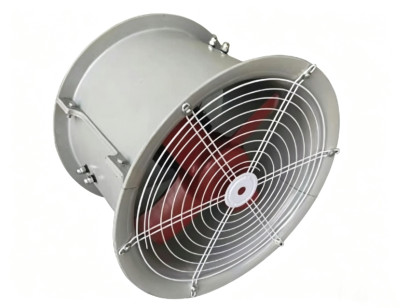
An axial fan moves air parallel to the rotating shaft, allowing air to enter and exit in approximately the same direction. This design is widely used in industrial ventilation applications that require high airflow with relatively low system resistance. An industrial axial fan is commonly installed in factories, workshops, warehouses, and equipment cooling systems to improve air circulation and remove accumulated heat. Its compact structure and straightforward installation make it suitable for wall-mounted ventilation, roof exhaust, and other applications with a relatively direct airflow path. For industrial facilities in Southeast Asia, where high temperatures and humidity can increase ventilation demands, axial flow fans can provide a practical solution for general air exchange and heat removal.
What Is a Centrifugal Fan?
A centrifugal fan draws air into the center of the impeller and discharges it outward through the fan housing. This design is particularly suitable for ventilation systems that need to overcome resistance from ductwork, filters, bends, and air treatment equipment. An industrial centrifugal fan is widely used in industrial exhaust, dust collection, fume extraction, HVAC systems, and manufacturing processes that require controlled airflow through a duct network. Depending on the application, centrifugal fans can be designed with different impeller configurations and construction materials to meet specific airflow, pressure, and environmental requirements. When a ventilation system requires reliable airflow against significant resistance, selecting a suitable centrifugal blower can help improve overall system performance.
Axial Fan vs. Centrifugal Fan: Key Differences
The main difference between an axial fan and a centrifugal fan is the direction of airflow and their performance under different system conditions. Axial fans are generally preferred for high-volume airflow in low-resistance applications, while centrifugal fans are often more suitable for systems requiring higher static pressure. However, the best choice depends on the actual fan design and operating conditions. Industrial buyers should evaluate airflow volume, static pressure, system resistance, and energy consumption together rather than comparing products by airflow capacity alone.
Installation requirements also influence fan selection. Axial fans are often installed directly in wall openings, roof structures, or ventilation passages, making them suitable for general factory ventilation. Centrifugal fans are commonly integrated into ducted ventilation systems, filtration equipment, and industrial exhaust networks. When a system contains long ducts, multiple bends, or filtration components, pressure losses must be considered during fan selection. Matching the fan to the system's operating requirements helps reduce the risk of insufficient airflow and unnecessary energy consumption.
When Should You Choose an Axial Fan?
An axial flow fan is a suitable option when a project requires large volumes of air to move through a relatively open ventilation path. Typical applications include warehouse ventilation, factory cooling, workshop exhaust, agricultural buildings, and equipment heat dissipation. In these environments, the main objective is often to improve air circulation or remove warm air efficiently rather than overcome substantial duct resistance. The final selection should still account for the required airflow, fan diameter, motor power, installation position, and operating conditions.
For distributors, engineering contractors, and industrial equipment buyers, choosing an axial fan manufacturer that can provide suitable product specifications is important for project planning. In hot and humid regions such as Malaysia, Thailand, Vietnam, Indonesia, and the Philippines, proper ventilation design can help manage indoor heat and improve working conditions. The fan must be selected according to the building layout and ventilation requirements to achieve the expected results.
When Should You Choose a Centrifugal Fan?
A centrifugal fan is often the preferred option when air must pass through a duct network, filter, air handling unit, or other equipment that creates resistance. Industrial exhaust systems, dust extraction installations, process ventilation, and certain chemical manufacturing applications may require the pressure performance that an appropriately selected centrifugal fan can provide. The impeller design, motor configuration, and fan housing should be matched to the required airflow and static pressure to ensure reliable operation.
Material selection is equally important in demanding industrial environments. For applications involving corrosive gases, moisture, or certain chemical fumes, an FRP centrifugal fan may be worth considering when its material compatibility and operating limits meet the project requirements. Stainless steel and other specialized construction options may also be appropriate for particular applications. Buyers should confirm the gas composition, operating temperature, corrosion conditions, and any necessary safety certifications before placing an order.
How to Choose the Right Industrial Ventilation Fan
Before purchasing an industrial ventilation fan, engineers and buyers should determine the required airflow rate and static pressure, along with the resistance created by ducts, filters, dampers, and other system components. Installation space, noise requirements, operating hours, motor efficiency, and maintenance access should also be considered. A fan's free-air capacity does not necessarily represent the airflow it will deliver after installation, so selection should be based on the expected operating point.
For businesses purchasing equipment in bulk or developing customized ventilation systems, working with an experienced industrial fan manufacturer can simplify technical evaluation and product selection. Providing the supplier with project specifications, application details, and installation requirements makes it easier to identify suitable models. This approach is particularly valuable for overseas buyers who need dependable equipment for factories, commercial buildings, and industrial engineering projects.
Shunda HVAC: Industrial Centrifugal Fan Solutions
Shunda HVAC provides ventilation and air movement solutions for industrial and HVAC applications. For buyers comparing axial fans and centrifugal fans, understanding the required airflow, static pressure, and installation conditions is the first step toward selecting suitable equipment. Whether your project involves factory ventilation, industrial exhaust, or a ducted air handling system, choosing the correct fan configuration can help support reliable performance and efficient operation.
Explore our industrial centrifugal fan product range to learn more about available solutions. If you are sourcing an industrial centrifugal fan for a new project or replacing existing ventilation equipment, contact Shunda HVAC with your airflow requirements, static pressure, application, and operating conditions. Our team can help you evaluate suitable product options and request a quotation. We welcome inquiries from overseas distributors, engineering contractors, and industrial buyers seeking ventilation solutions for Southeast Asia and other international markets.
Conclusion
When comparing an axial fan vs. a centrifugal fan for industrial ventilation, the most important factor is the actual application. Axial fans are generally suitable for high-volume airflow and relatively low-resistance ventilation, while centrifugal fans are often better suited to ducted systems and applications with greater pressure requirements. By evaluating airflow, static pressure, installation conditions, and material compatibility, industrial buyers can make a more informed purchasing decision. Contact Shunda HVAC to discuss your ventilation project and find a suitable industrial fan solution.