What to Look for When Buying an Industrial Fan?
When buying an industrial fan, choosing the right model is much more important than simply selecting a fan with a larger motor or higher airflow. Industrial ventilation systems operate under very different conditions from ordinary commercial ventilation systems. A factory may need to remove heat, dust, smoke, moisture, corrosive gases, or contaminated air, while some production environments require continuous operation under high temperature or high humidity conditions. For this reason, industrial buyers should consider airflow, static pressure, fan type, material, motor configuration, operating environment, energy efficiency, maintenance requirements, and supplier experience before placing an order. For factories and engineering projects in Southeast Asia, where high temperatures, high humidity, coastal environments, chemical processing, manufacturing, and continuous production are common, selecting the correct industrial fan can directly affect ventilation performance, energy consumption, equipment service life, and overall project cost.
Why Choosing the Right Industrial Fan Matters
An industrial fan is a critical part of a factory ventilation system. It is responsible for moving large volumes of air through production areas, workshops, warehouses, ducts, filtration equipment, exhaust systems, and other HVAC components. If the fan is incorrectly selected, the ventilation system may not achieve the required airflow even when the motor is running normally. An undersized fan may produce insufficient air movement, while an oversized fan can increase electricity consumption, noise, vibration, and unnecessary equipment costs. The correct approach is to select the fan according to the actual operating point of the ventilation system rather than choosing a product only by motor power or catalog size. Airflow and static pressure should be considered together because ductwork, elbows, filters, dampers, louvers, silencers, and other components all create resistance. This is particularly important for industrial ventilation fans used in manufacturing plants, chemical factories, warehouses, workshops, wastewater treatment facilities, food-processing plants, and other industrial environments. Professional fan selection starts with the complete ventilation requirement rather than the fan model number.
1. Check the Required Airflow Before Buying an Industrial Fan
The first specification to determine when purchasing an industrial fan is the required airflow. Airflow is normally expressed in m³/h, CFM, or other engineering units and represents how much air the fan needs to move within a certain period. Different industrial applications require completely different airflow levels. A small production workshop may require general exhaust ventilation, while a large manufacturing facility may require several high-volume fans working continuously. Dust collection, welding fume extraction, chemical exhaust, boiler ventilation, warehouse cooling, and process ventilation also have different airflow requirements. Buyers should therefore provide the supplier with the required airflow before asking for a quotation. If the airflow requirement is unknown, the fan manufacturer should be able to calculate or recommend the appropriate capacity based on the building size, production process, ventilation rate, exhaust points, and system design. Choosing an industrial exhaust fan only by physical size or motor horsepower can easily result in an inefficient ventilation system.
2. Static Pressure Is Just as Important as Airflow
Many industrial buyers focus heavily on airflow while overlooking static pressure. This is one of the most common reasons an industrial ventilation system fails to achieve its expected performance. Static pressure represents the resistance that the fan needs to overcome while moving air through the system. Long ducts, multiple elbows, filters, dampers, silencers, heat exchangers, grilles, and dust collectors can all increase system resistance. When the ventilation system has high resistance, an industrial centrifugal fan is often more suitable because centrifugal fans are designed to provide higher pressure than many general-purpose axial fans. The fan should be selected according to the actual system operating point, where the required airflow and system resistance intersect on the fan performance curve. This approach helps prevent problems such as insufficient exhaust capacity, excessive motor load, unstable airflow, and high operating costs. For professional industrial ventilation projects, airflow and static pressure should always be provided together when requesting a quotation.
3. Choose Between a Centrifugal Fan and an Axial Fan
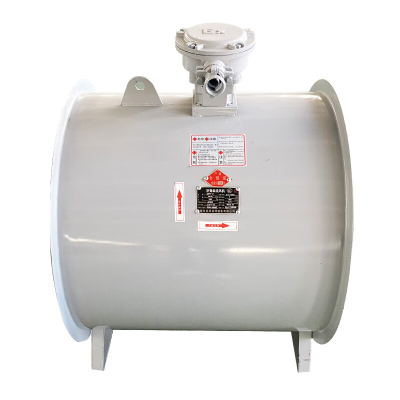
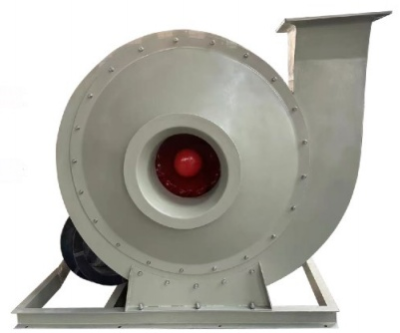
One of the most important decisions when buying an industrial fan is whether the project requires a centrifugal fan or an axial fan. These two fan types have different operating characteristics and should not simply be treated as interchangeable products. A centrifugal fan draws air into the center of the impeller and discharges it radially, making it suitable for applications that require higher static pressure. Industrial centrifugal fans are widely used in ducted ventilation, dust collection, industrial exhaust, filtration systems, chemical processing, air handling equipment, and other applications where the air needs to overcome significant resistance. Axial fans move air primarily parallel to the motor shaft and are generally suitable for high-volume, lower-resistance applications such as factory ventilation, warehouse cooling, roof ventilation, workshops, tunnels, and general air exchange. Selecting between a centrifugal industrial fan and an industrial axial flow fan should therefore be based on the airflow path, pressure requirement, installation conditions, and application rather than simply comparing motor power or price.
4. Consider the Working Environment and Fan Material
The working environment is another major factor that industrial buyers should consider before purchasing a ventilation fan. A fan operating in a normal manufacturing workshop may have completely different material requirements from a fan installed in a chemical plant or wastewater treatment facility. If the air contains corrosive gases, moisture, chemicals, salt, or other aggressive substances, standard carbon steel construction may not provide sufficient long-term protection. FRP industrial fans, fiberglass reinforced plastic fans, and stainless steel industrial fans can be considered for applications where corrosion resistance is important. This issue is particularly relevant in Southeast Asia because many factories operate in hot and humid environments, while coastal industrial facilities may also face increased exposure to moisture and salt. Chemical plants, wastewater treatment plants, electroplating facilities, pharmaceutical factories, and certain food-processing environments may require specialized materials to achieve a longer service life. Shunda currently offers products including FRP 4-72-C industrial centrifugal fans, FRP axial flow fans, stainless steel fan solutions, and other customized industrial ventilation equipment.
5. Check Temperature, Dust, Moisture and Corrosive Conditions
Before ordering an industrial ventilation fan, buyers should clearly identify what type of air the fan will handle. Clean air, hot air, dusty air, oily air, humid air, corrosive gas, and combustible or potentially hazardous air can require completely different fan configurations. For example, a factory exhaust system handling welding fumes or dust may require a different impeller and filtration arrangement from a clean-air HVAC application. High-temperature applications may require high-temperature-resistant components and appropriate motor protection, while corrosive environments may require FRP or stainless steel construction. If the application involves potentially explosive gases, vapors, or dust, an explosion-proof ventilation solution and appropriate electrical configuration may be required. Providing complete working-condition information to the manufacturer before production allows engineers to select the appropriate fan structure, material, motor, and accessories rather than modifying the system after installation.
6. Pay Attention to Motor Efficiency and Power Consumption
The purchase price is only one part of the total cost of an industrial fan. Because industrial ventilation equipment often operates for many hours every day, electricity consumption can become a significant part of the equipment's lifecycle cost. A fan that appears inexpensive at the purchasing stage may become expensive if it consumes excessive power throughout its operating life. Buyers should therefore compare fan efficiency, operating point, motor efficiency, speed control options, and actual system requirements rather than comparing motor horsepower alone. Variable frequency drives can also provide useful control when airflow requirements change during different production periods. For factories in Singapore, Malaysia, Indonesia, Thailand, Vietnam, and the Philippines, energy-efficient ventilation can be particularly valuable because industrial facilities often require continuous ventilation under warm and humid climatic conditions. Correct fan selection can reduce unnecessary energy consumption while maintaining stable ventilation performance.
7. Check the Fan Performance Curve Before Ordering
A professional industrial fan manufacturer should be able to provide technical information showing how the fan performs under different operating conditions. The performance curve is particularly important because it allows engineers to understand the relationship between airflow, static pressure, speed, efficiency, and motor power. Instead of selecting a fan simply because its advertised airflow looks high, buyers should confirm whether the fan can deliver the required airflow at the actual system pressure. This is especially important for industrial centrifugal fans connected to long duct systems, filters, dust collectors, or other high-resistance equipment. A proper performance curve gives engineers a much clearer understanding of whether the selected fan will operate efficiently and reliably after installation.
8. Consider Noise, Vibration and Maintenance
Industrial fans are often installed close to production equipment and workers, so noise and vibration should not be ignored. Poorly balanced impellers, unsuitable operating points, incorrect installation, or excessive motor load can lead to vibration and premature component wear. Buyers should ask about impeller balancing, bearing quality, motor configuration, structural strength, and maintenance access before purchasing an industrial ventilation fan. Maintenance is also important for factories that operate continuously. The fan should allow convenient inspection, cleaning, lubrication, and replacement of wear parts when necessary. A well-designed industrial exhaust fan should not only provide the required airflow but also maintain stable performance over long operating periods.
9. Select an Industrial Fan Manufacturer With OEM Capability
For overseas industrial projects, choosing the right supplier can be just as important as choosing the right fan. A reliable industrial fan manufacturer should be able to provide technical selection support rather than simply sending a price list. International buyers should consider manufacturing capability, export experience, product range, quality control, technical documentation, customization capability, spare parts, packaging, and after-sales support. OEM and customized production can be especially valuable for engineering contractors, distributors, HVAC companies, and industrial equipment suppliers because the fan may need to match specific airflow, pressure, voltage, frequency, installation dimensions, materials, or project requirements. For Southeast Asian customers, the supplier should also understand international shipping requirements and be able to prepare suitable export packaging for large and heavy industrial ventilation equipment.
Industrial Fan Selection for Southeast Asian Factories
Southeast Asia has become an important market for industrial HVAC and ventilation equipment as manufacturing, logistics, food processing, electronics, chemical production, infrastructure, and commercial construction continue to develop. Buyers in Singapore, Malaysia, Indonesia, Thailand, Vietnam, and the Philippines often face a combination of high temperature, high humidity, intensive industrial production, and long operating hours. This makes reliable industrial ventilation especially important. Depending on the application, factories may require industrial centrifugal fans for high-pressure duct systems, axial fans for high-volume factory ventilation, FRP fans for corrosive environments, explosion-proof fans for hazardous areas, or customized industrial exhaust systems for specific production processes. Selecting equipment according to local environmental conditions and actual project requirements can help improve reliability and reduce long-term operating costs.
Why Choose Shunda as Your Industrial Fan Supplier?
Shunda HVAC provides industrial ventilation and HVAC equipment for international industrial projects, including industrial centrifugal fans, axial flow fans, FRP corrosion-resistant fans, high-pressure centrifugal blowers, industrial exhaust solutions, air handling units, and customized HVAC equipment. Our product range is designed for factories, commercial buildings, chemical plants, wastewater treatment facilities, warehouses, workshops, and other industrial applications. For overseas B2B customers, Shunda can provide OEM and customized fan solutions according to airflow, static pressure, temperature, material, motor voltage, installation requirements, and other project parameters. Our existing product range includes FRP 4-72-C industrial centrifugal fans, high-pressure centrifugal blowers, FT35-11 FRP axial flow fans, and other industrial ventilation equipment.
For buyers who are comparing industrial fan suppliers in China, the most important consideration is not simply the lowest quotation. A successful industrial ventilation project depends on whether the supplier understands the application, selects the correct fan according to airflow and pressure, provides appropriate materials and motors, and can support the project from technical selection through production and delivery. Shunda's approach is to combine manufacturing capability with technical selection support, helping international contractors, distributors, engineering companies, and factory owners obtain industrial ventilation equipment matched to their actual operating conditions.
Conclusion: Buy the Industrial Fan Based on the Application, Not Just the Price
Buying an industrial fan is a technical decision rather than a simple product purchase. Before placing an order, buyers should confirm the required airflow, static pressure, air temperature, dust and moisture conditions, corrosive environment, installation space, power supply, noise requirements, maintenance requirements, and expected operating hours. The right fan type, material, motor, and control system can significantly improve ventilation performance and reduce energy and maintenance costs over the equipment's service life. For industrial projects in Southeast Asia, working with an experienced industrial fan manufacturer and supplier can also make equipment selection, customization, export packaging, and technical communication much easier. Whether you need a centrifugal fan, axial flow fan, FRP industrial fan, high-pressure blower, or customized industrial ventilation solution, the best starting point is to provide the supplier with your actual project conditions and request a professional selection recommendation.
Looking for an industrial fan for your factory or HVAC project? Contact Shunda HVAC for industrial fan selection, OEM customization, technical support, and quotation. Visit the official Shunda HVAC website: Shunda HVAC