Centrifugal Fan vs. Axial Fan: Which One Should You Choose?
Industrial ventilation has become one of the most important factors affecting workplace safety, production efficiency, and energy consumption across manufacturing plants, warehouses, commercial buildings, and chemical facilities. When engineers and procurement managers begin designing a ventilation system, the first question is often the same: Should you choose a centrifugal fan or an axial fan? Although both products move air, they are designed for completely different operating conditions. Selecting the wrong fan can lead to insufficient airflow, excessive power consumption, higher maintenance costs, and reduced equipment life. This guide explains the differences in a practical way, helping overseas buyers and HVAC contractors choose the most suitable industrial ventilation solution for their projects.
Why the Right Industrial Fan Matters
Modern HVAC and industrial ventilation systems require more than simply moving air from one place to another. Different industries demand different levels of airflow, static pressure, noise control, corrosion resistance, and installation flexibility. A textile factory may need continuous high-pressure duct ventilation, while a warehouse may require large-volume fresh air circulation with lower resistance. Understanding the working characteristics of centrifugal fans and axial fans allows businesses to reduce operating costs while improving ventilation efficiency.
A professional industrial fan manufacturer will usually recommend the fan according to the system rather than the airflow alone. The length of the duct, the number of bends, filtration equipment, humid environments, and chemical gases all influence the final selection. That is why choosing the correct fan at the design stage is much more economical than replacing equipment after installation.
Understanding How Centrifugal Fans Work
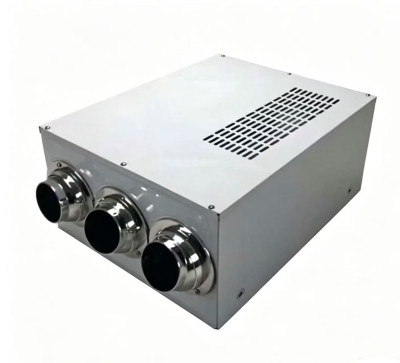
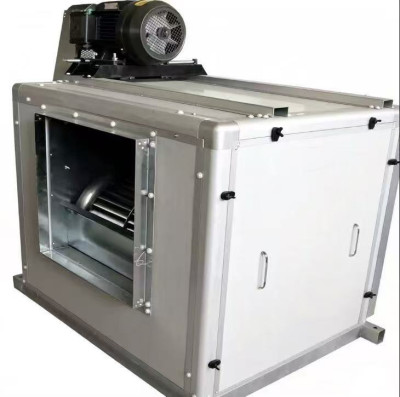
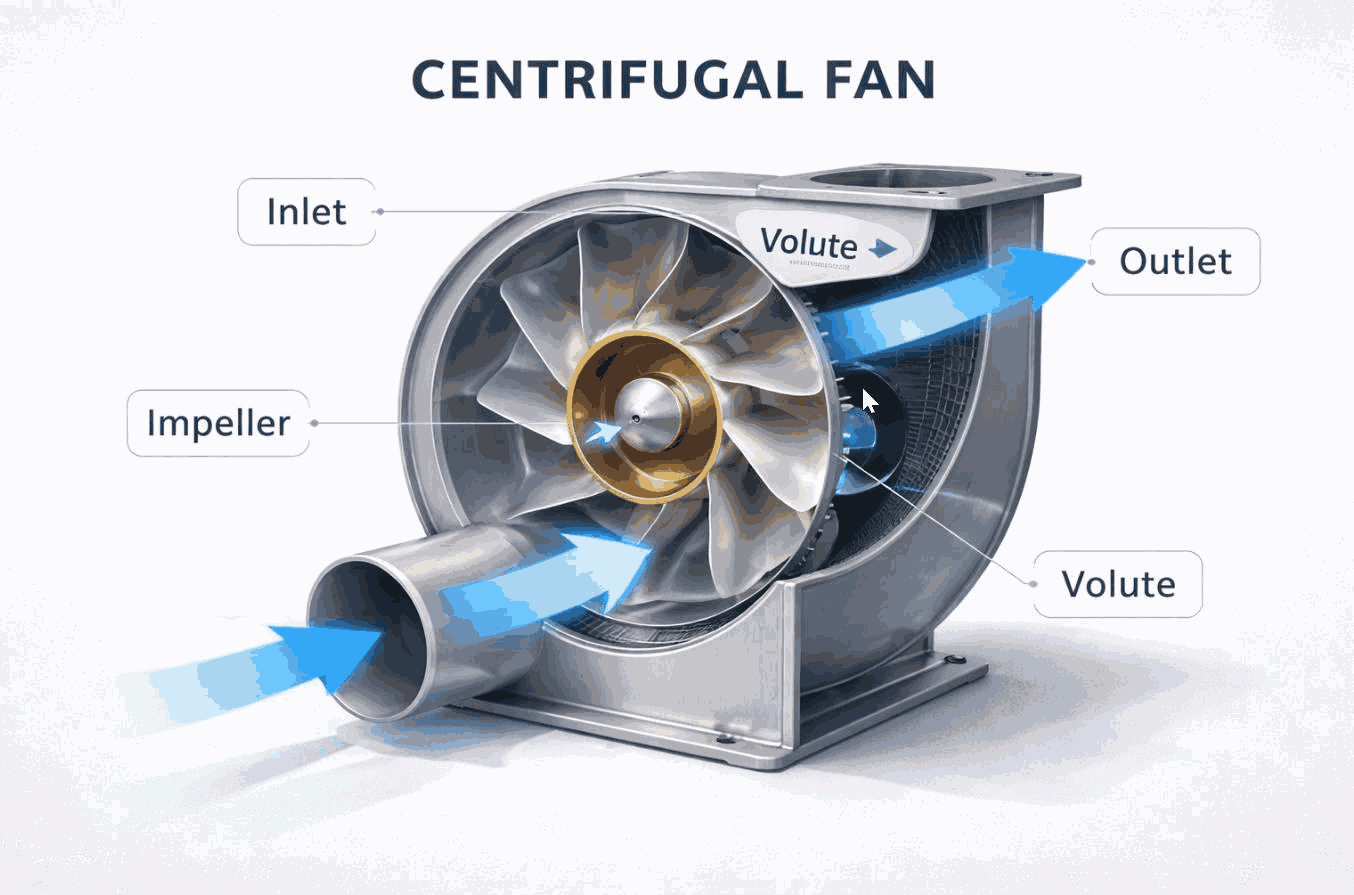
A centrifugal fan draws air into the center of the impeller and uses centrifugal force to discharge it at a 90-degree angle. This unique airflow path enables the fan to generate much higher static pressure than an axial fan, making it ideal for ducted ventilation systems. In factories where air must travel through long pipelines, filters, silencers, or dust collection equipment, centrifugal blowers maintain stable airflow even under significant resistance.
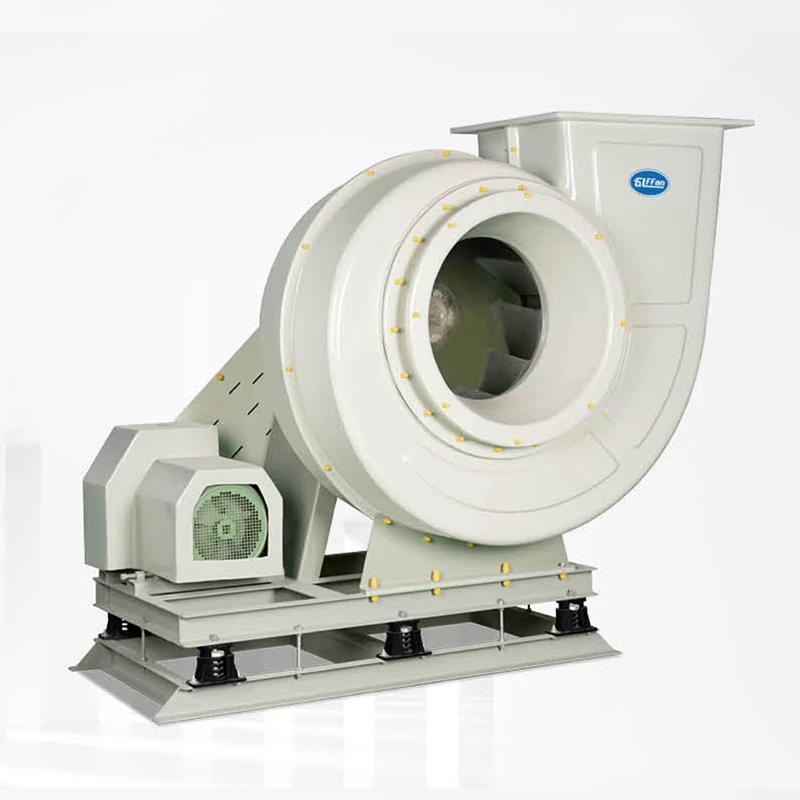
For industrial HVAC applications, centrifugal fans are commonly installed in chemical plants, pharmaceutical workshops, laboratories, underground parking ventilation, clean rooms, and commercial air handling units. FRP centrifugal fans are especially popular throughout Southeast Asia because fiberglass reinforced plastic offers excellent resistance against acidic and alkaline gases commonly found in wastewater treatment and chemical processing facilities. Their durable construction also extends service life in humid tropical environments.
How Axial Fans Deliver High Air Volume
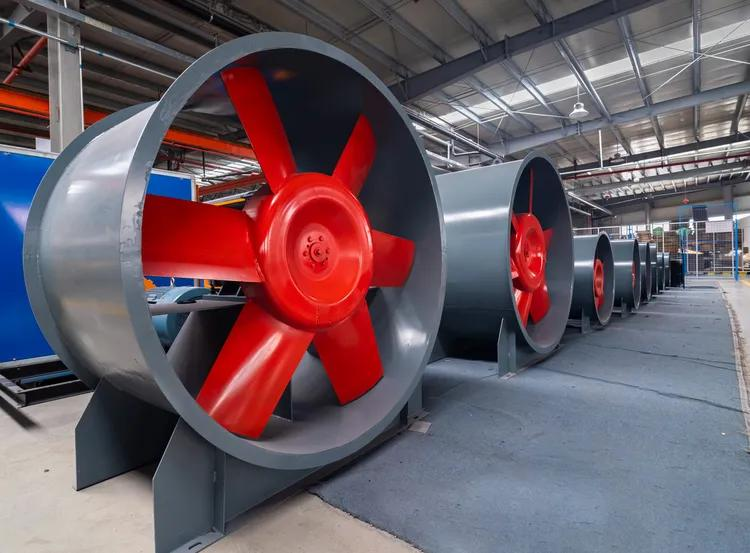
An axial fan moves air parallel to the motor shaft, similar to the way a propeller pushes air forward. Rather than generating high pressure, axial fans excel at delivering large airflow volumes with relatively low resistance. This makes them the preferred solution for warehouse ventilation, agricultural buildings, logistics centers, commercial workshops, and general factory cooling where fresh air exchange is the primary objective.
Because of their straightforward structure, axial flow fans are typically lighter, easier to install, and more economical for large-area ventilation. Many industrial facilities use wall-mounted or roof-mounted axial fans to remove heat generated by machinery while introducing outdoor fresh air. When duct systems are short and airflow demand is high, axial fans often provide the most energy-efficient performance.
The Real Difference Between Centrifugal Fans and Axial Fans
The biggest distinction is not airflow volume alone—it is static pressure. Centrifugal fans are engineered to overcome resistance inside complex ventilation networks, while axial fans are designed to move the greatest amount of air through open or low-resistance spaces. In practical engineering projects, centrifugal fans become the preferred choice whenever air passes through filters, ducts, or pollution control equipment. Axial fans become more suitable when the objective is rapid air circulation across large spaces.
Another important consideration is installation environment. Industrial kitchens, paint booths, laboratories, and chemical facilities usually require centrifugal exhaust systems because contaminated air must travel through treatment equipment before discharge. By contrast, factories producing textiles, electronics, furniture, or packaging often combine roof ventilators with axial fans to improve indoor comfort and reduce heat accumulation without extensive ductwork.
Which Fan Is Better for Your Industry?
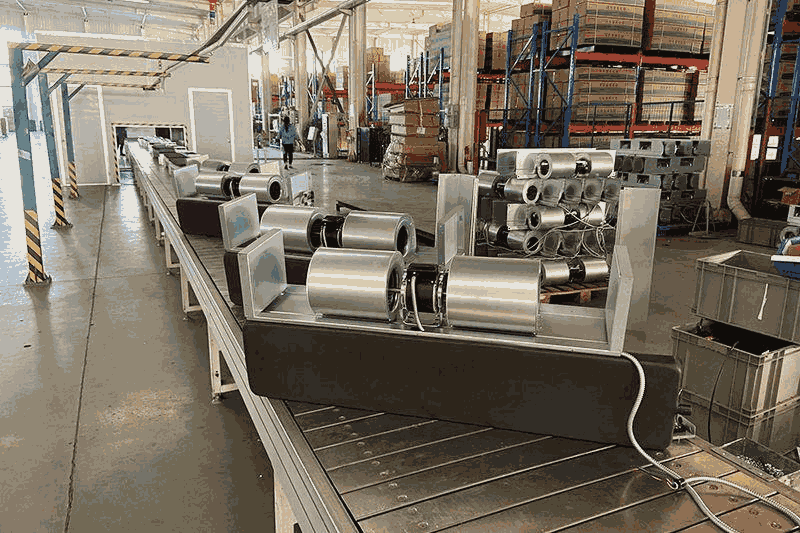
Choosing between a centrifugal fan and an axial fan depends on the application rather than which product is universally better. For chemical plants handling corrosive gases, FRP centrifugal fans provide reliable pressure and corrosion resistance. Pharmaceutical facilities benefit from centrifugal fans because they maintain stable airflow through filtration systems and clean-room ductwork. Large warehouses and manufacturing workshops often achieve better energy efficiency with axial fans because they prioritize air exchange over pressure. Commercial HVAC systems frequently combine both products, using centrifugal fans inside air handling units and axial fans for cooling towers or fresh-air exhaust.
This application-based approach is particularly valuable for projects across Malaysia, Singapore, Indonesia, the Philippines, Thailand, and Vietnam, where tropical climates require continuous ventilation while energy consumption remains a major operational concern.
Energy Efficiency and Long-Term Operating Cost
Many buyers focus only on the purchase price, but the lifetime operating cost of an industrial fan is usually much higher than the initial investment. High-efficiency centrifugal fans equipped with optimized backward-curved impellers can significantly reduce electricity consumption in high-pressure ventilation systems. Similarly, modern axial fans with aerodynamic blades provide excellent airflow while lowering motor load during continuous operation.
Selecting the correct airflow and pressure point is equally important. An oversized fan wastes energy, while an undersized model struggles to achieve the required ventilation performance. Working with an experienced HVAC manufacturer ensures that airflow calculations, duct resistance, motor power, and installation conditions are matched before production begins, especially for OEM and customized industrial fan projects.
How to Choose the Right Industrial Ventilation Fan
Before requesting a quotation, it is essential to determine the required airflow volume, static pressure, installation environment, operating temperature, and whether corrosive gases are present. These technical parameters allow manufacturers to recommend either a centrifugal fan or an axial fan with the correct impeller design and motor configuration. Customized solutions including FRP materials, stainless steel construction, explosion-proof motors, and variable-speed control are widely available for industrial ventilation projects.
At Shunda HVAC, we manufacture a complete range of centrifugal fans, axial flow fans, FRP industrial blowers, and customized HVAC ventilation equipment for factories, commercial buildings, and infrastructure projects worldwide. Whether your project requires high-pressure duct ventilation or large-volume fresh air circulation, our engineering team provides OEM manufacturing, technical selection support, and fast quotation services for customers throughout Southeast Asia and global markets.