Axial Flow Fan selection guide for HVAC contractors
Axial Flow Fan selection guide for HVAC contractors
If you’ve ever had a “simple ventilation fan” turn into a callback, you already know the pattern: the fan moves plenty of air on paper, but once it’s tied into real ductwork, roof penetrations, louvers, or dampers, performance drops. Then come the complaints: heat still hanging in the space, pressure not clearing, or noise you can’t tune out.
This article is a contractor-first selection guide to help you spec an Axial Flow Fan that hits the job requirements without guesswork or made-up numbers.
Why axial fan jobs go wrong (and how to avoid callbacks)
Most axial fan failures aren’t “bad fans.” They’re mismatches:
Airflow volume (CFM / m³/h) was estimated instead of calculated.
Static pressure (Pa) was treated like a rounding error.
Duct diameter and fittings created more resistance than expected.
The environment (corrosion, heat, hazardous area) demanded a different construction.
The fix is to select around the real operating point, not the biggest number on a datasheet.
Axial flow fan basics: where it wins, where it loses
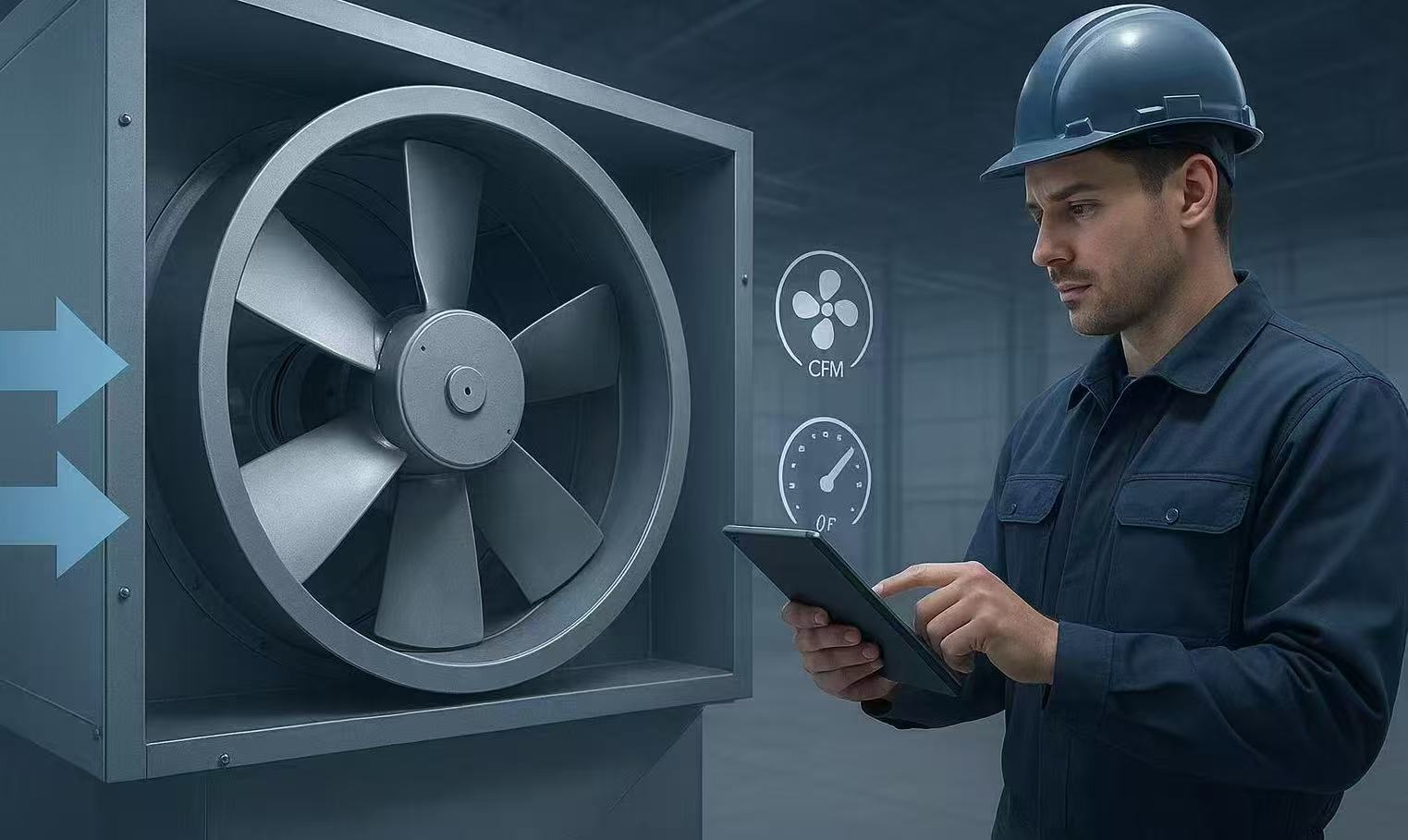
An axial flow fan moves air in a straight line along the fan’s axis (propeller-style). In the field, that usually means it’s a strong fit for high-airflow ventilation when resistance is low to moderate, and a weak fit when the system needs high static pressure.
The key tradeoff: airflow and static pressure move in opposite directions. A fan can’t deliver maximum airflow and maximum static pressure at the same time.
According to Shunda Air Conditioning Company fan basics on airflow, static pressure, and impedance, your system resistance (impedance) determines where the fan actually runs (the intersection of the fan curve and the system curve). That operating point is what matters on the job.
Selection workflow: match airflow, pressure, and duct reality
(1)Start with airflow volume (CFM / m³/h)
Define the ventilation target in job terms first (air changes, heat removal, or dilution), then convert that into required airflow volume (CFM / m³/h).
Sanity-check the application before you lock in a fan:
Mostly open space (warehouse ventilation) or ducted (duct axial fan) setup?
Any branching or multiple zones that will change resistance?
Clean air, or a dirty airstream that will load up guards, louvers, and coils over time?
(2)Treat static pressure (Pa) as a first-class input
If your design includes ducts, elbows, dampers, louvers, or guards, you have static pressure. And static pressure is where axial fans can underdeliver.You don’t pick the fan at “free air” numbers. You pick it at the pressure your system imposes.
For practical axial fan types and pressure context,Shunda Air ’s industrial ventilation fan selection overview describes common axial fan categories and notes that tubeaxial fans are often used for moderate static pressure, while vaneaxial fans are used for higher static pressure in axial applications in clean-air scenarios.
That’s not a substitute for a fan curve, but it’s a good warning sign: if your pressure requirement keeps climbing, you may be pushing the job into a different fan class.
Pro Tip: If you can’t confidently estimate system resistance, request the fan curve from your supplier and confirm the operating point before you ship it to the job.
(3)Confirm duct diameter and physical install constraints
Ductwork is not a footnote. A few questions now prevent rework later:
What is the duct diameter and available straight run before/after the fan?
Is it roof-mounted, wall-mounted, or inline?
Do you need weather hoods, backdraft dampers, or bird screens, and what restriction will they add?
How will you access the axial fan motor and the axial fan blade for inspection and cleaning?
If a fan is squeezed into a bad transition or turbulent section, you’ll see it as noise, vibration, and disappointing airflow.
Environment and compliance: match the build to the site
Not every “industrial axial fan” belongs in every industrial environment. Spec the construction and motor protection around the jobsite reality:
Corrosion-resistant axial fan: coastal air, wastewater areas, chemical exposure, or constant condensation.
High temperature axial fan: hot exhaust streams, process-adjacent ventilation, or heat exchanger discharge.
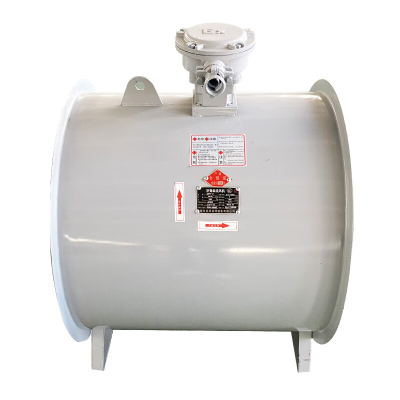
Explosion-proof axial fan: hazardous locations with flammable vapors or combustible dust.
⚠️Warning: If a job requires an explosion-proof fan, you need verified compliance documentation for the specific model and motor configuration. Treat “explosion-proof” as a compliance spec, not a marketing label.
Application callouts: match the fan to the job
Common contractor scenarios and what to emphasize:
Axial fan supplier for warehouse ventilation: prioritize high airflow, service access, and noise control.
Roof axial fan: focus on weather resistance, curb/roof interface, drainage, and maintenance access.
Cooling fan / heat exchanger fan: airflow uniformity and controllability matter; confirm temperature and duty cycle.
Marine axial fan: corrosion resistance and mounting robustness become first-order needs.
Mine axial fan: dust, abrasion, and compliance requirements can dominate; confirm environmental assumptions early.
The contractor-ready spec sheet (send this before you request pricing)
If you want quotes that come back fast and correct, send these inputs:
Required airflow volume (CFM / m³/h)
Estimated static pressure (Pa), plus what’s creating it (duct length, elbows, dampers, louvers)
Duct diameter and available space (inline, wall, roof)
Power requirements (voltage/phase/frequency) and whether speed control is required
Airstream details (clean air vs particulate; temperature; humidity; corrosives)
Hazardous area requirement (if any)
Noise constraints (occupied space, regulations)
Next steps: shortlist axial fan options with Shunda
To start narrowing by installation type and environment, use the product hub:
Explore Shunda Axial Flow Fan options (including wall-mounted, roof, FRP, and explosion-proof variants).
If your ventilation design calls for other air-moving components, you can also review HVAC Blowers and system-level options like Fresh Air Systems .
If you share your airflow target, estimated static pressure, duct diameter, and environment (corrosive / hot / hazardous), we can help point you to the most relevant configurations for the job.